

GPT-5.5 และ SeaGames: ทำไมเวิร์กโฟลว์เกมถึงเอาชนะแชทดิบ
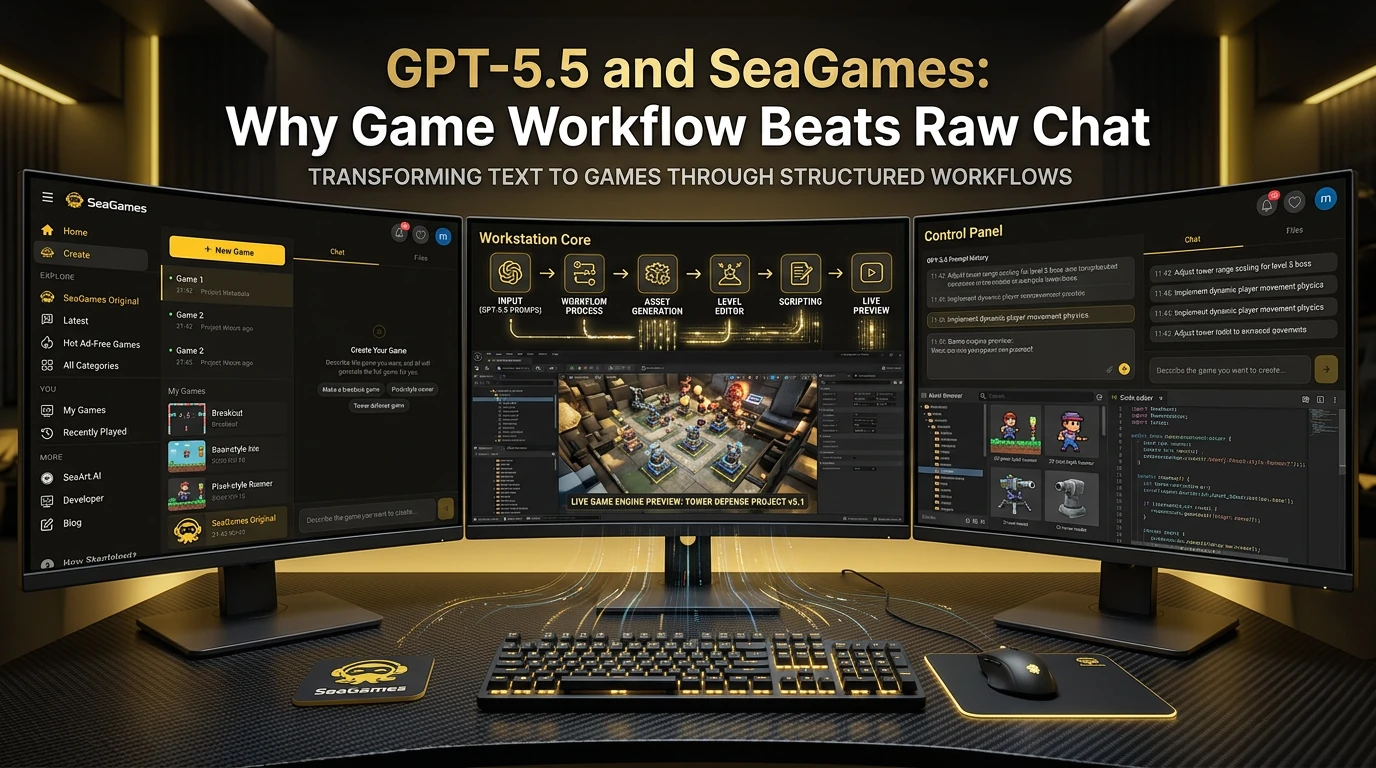
🎮 GPT-5.5 and SeaGames: Why Workflow Beats Raw Chat for Game Creators
When OpenAI ships a new GPT generation, game creators should pay attention — but not for the reason the hype suggests. GPT-5.5 is aimed at difficult knowledge work, stronger tool use, and large-context tasks. That is a genuine upgrade. What it does not change is the game-shaped problem: you still need to steer mechanics, preserve design intent across sessions, and get something playable in front of players.
This piece compares two ways to use GPT-5.5-class intelligence for browser game creation: a raw chat thread versus SeaGames' natural language → preview → publish loop. The model on the badge matters less than whether your setup remembers what the game is.
⚡ Quick answer
🔹 GPT-5.5 upgrades the engine; SeaGames keeps the game on the road
Use GPT-5.5-class intelligence for the hard generation lifts: tighter game logic, richer level designs, sharper mechanics descriptions, cleaner code for interactions. Use SeaGames for the shape of the work: natural language game spec, browser preview loop, iterative chat revisions, and publish when the build earns its name.
💬 What raw chat still wins at (even with GPT-5.5)
🔹 Fast experiments and one-off generation
Chat remains excellent for quick probes: ten alternate game titles, a one-paragraph mechanic description, a single enemy behavior idea in three flavors. If you are not trying to finish and ship a game, friction is low and iteration is fast.
GPT-5.5's improved tool use and reasoning mean those one-off experiments are higher quality than before. A prompt like "design a three-wave boss fight with escalating mechanics" now returns something you can actually use as a design spec rather than generic filler.
📉 Where raw chat quietly loses games
🔹 Context resets, scattered specs, fragile momentum
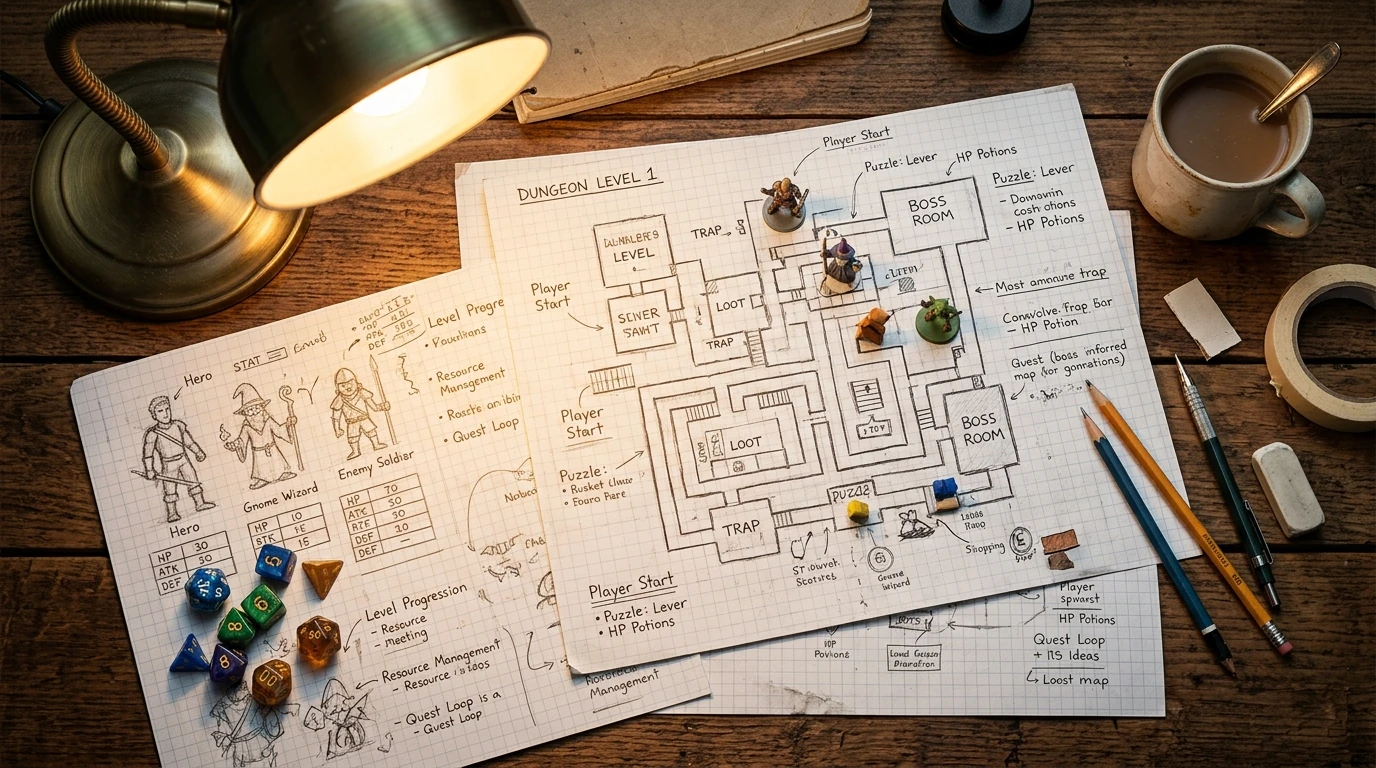
Game projects punish ad hoc threads. You re-paste the mechanic spec every session. You lose the version of the level design that finally clicked. You ask for a revision and the model forgets the enemy speed you set three messages ago. You share a chat link with a collaborator and the context they need is buried in scroll.
A smarter GPT-5.5 reduces some of that pain — it follows complex instructions more faithfully, holds more context in one pass, and uses tools more reliably. It does not erase the architecture problem: a game is not a single prompt, it is a system of rules, assets, and player interactions that need to stay consistent across many sessions.
🌊 What SeaGames adds on top of GPT-5.5
🔹 Game operations, not only game sentences
SeaGames is built around a repeatable path: describe a game in plain language, preview it running in the browser, revise through conversation, and publish when the build earns its name. That loop does not change when a new model ships — it absorbs the upgrade.
The game-specific operations SeaGames wraps around the model — browser preview, iterative mechanics revision, publish and share — are exactly what raw chat lacks. GPT-5.5 makes each generation step higher quality; SeaGames makes each step connect to the next one.
As OpenAI ships GPT-5.5-class intelligence across their products, platforms that already separate game spec → generation → play → revise → publish absorb the upgrade without forcing creators to rebuild their process from scratch. The model rotates in; the workflow stays.
📊 At a glance: raw chat vs SeaGames for browser games
🔹 Same model family, different container
| Job | Raw chat (GPT-5.5 era) | SeaGames workflow |
|---|---|---|
| Quick game idea | Excellent | Strong, tied to project |
| Playable preview | Needs manual setup | Built-in browser preview |
| Mechanics consistency | Re-paste spec each session | Persists across revisions |
| Share with players | Export and host manually | Publish link from platform |
| Iterate on feedback | New thread, lost context | Chat revision in same project |
| Model upgrade benefit | Better single-turn output | Better output inside a workflow |
🧪 Practical combo for 2026 game creators
🔹 Let the frontier upgrade speed the steps you already named
Describe the game in SeaGames — genre, core loop, win condition, one paragraph. Let GPT-5.5-class generation produce the first playable draft. Preview in the browser. Note friction points in specific terms ("jump feels floaty," "enemies spawn too fast"). Send those as revision prompts. GPT-5.5 follows precise, multi-constraint instructions better than earlier models — that matters most here, at the revision step, not just the first generation.
When the build earns its name, publish. Share the link. Watch where players quit or replay. Use that signal to scope the next prompt. The sequence stays human-led; GPT-5.5 simply reduces how often you fight the model to stay on brief.
✅ Takeaway
🔹 Hot model, disciplined loop
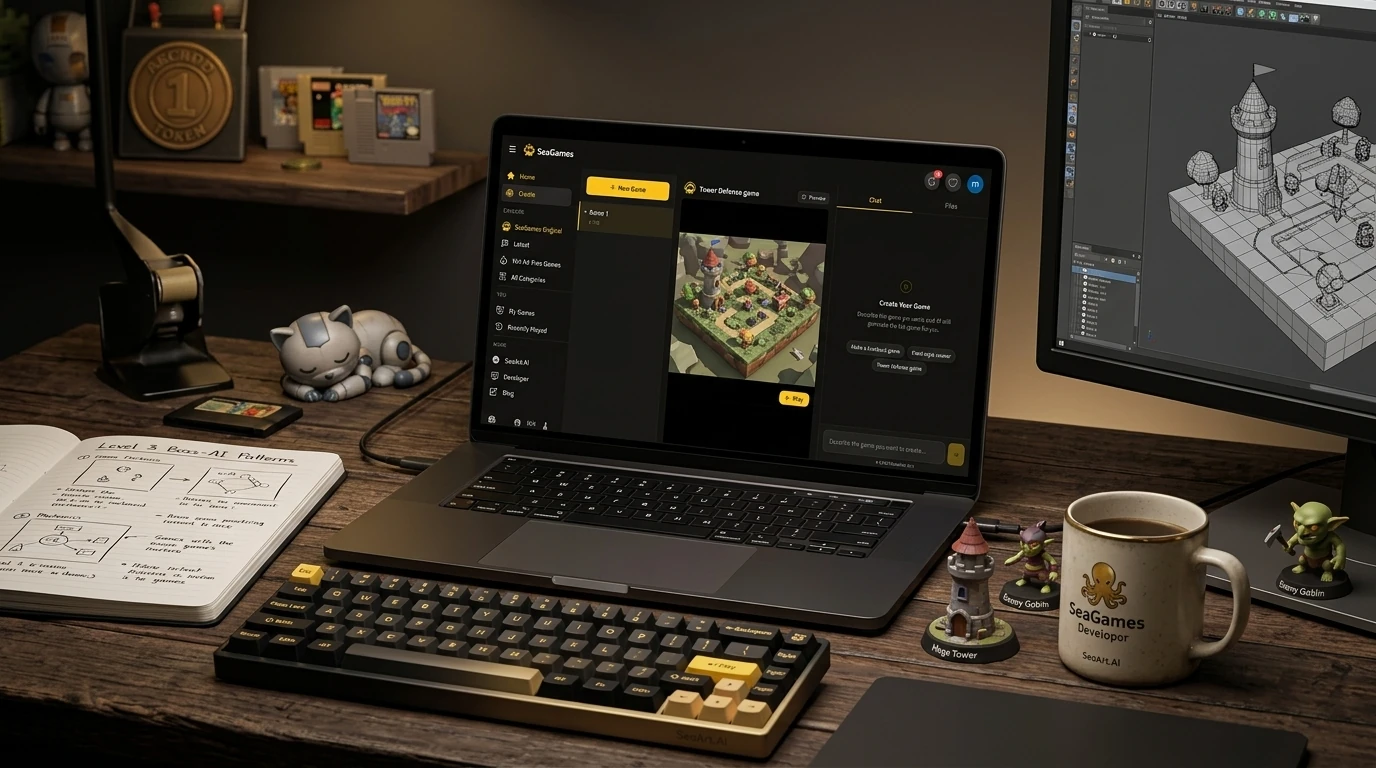
GPT-5.5 is a headline worth watching for browser game creators because it raises quality per prompt inside serious generation tasks — tighter mechanics, better-reasoned level design, more faithful instruction following across long revisions. Finishing a game still rewards a game-first platform. SeaGames stays relevant exactly because it treats the game as the unit of work — not the chat bubble.
❓ FAQ
🔹 Quick clarifications
Do I need SeaGames if I already pay for GPT-5.5?
You do not need any specific tool. If you are building and shipping a browser game, a platform that handles preview, revision, and publish usually saves more time than a raw chat interface — even when the underlying model is excellent.
Does GPT-5.5 make it easier to build complex games?
GPT-5.5's stronger tool use and reasoning genuinely helps with multi-system game logic — enemy AI, physics rules, UI interactions. The ceiling moves up. The workflow requirement — spec, preview, revise, test — stays the same regardless of model quality.
Is SeaGames locked to one model?
SeaGames is built around a natural language loop that can benefit from whatever model powers it. When GPT-5.5-class options appear, the workflow absorbs the upgrade — you do not rebuild your game spec from scratch.
What should I verify on OpenAI's side?
Plan eligibility, context limits, rate limits, and pricing. Those shift with each release; your game production schedule should not depend on a single day's feature table. Check OpenAI's official GPT-5.5 announcement for current terms.