

Why Indie Developers Pick SeaGames as Their First Stop
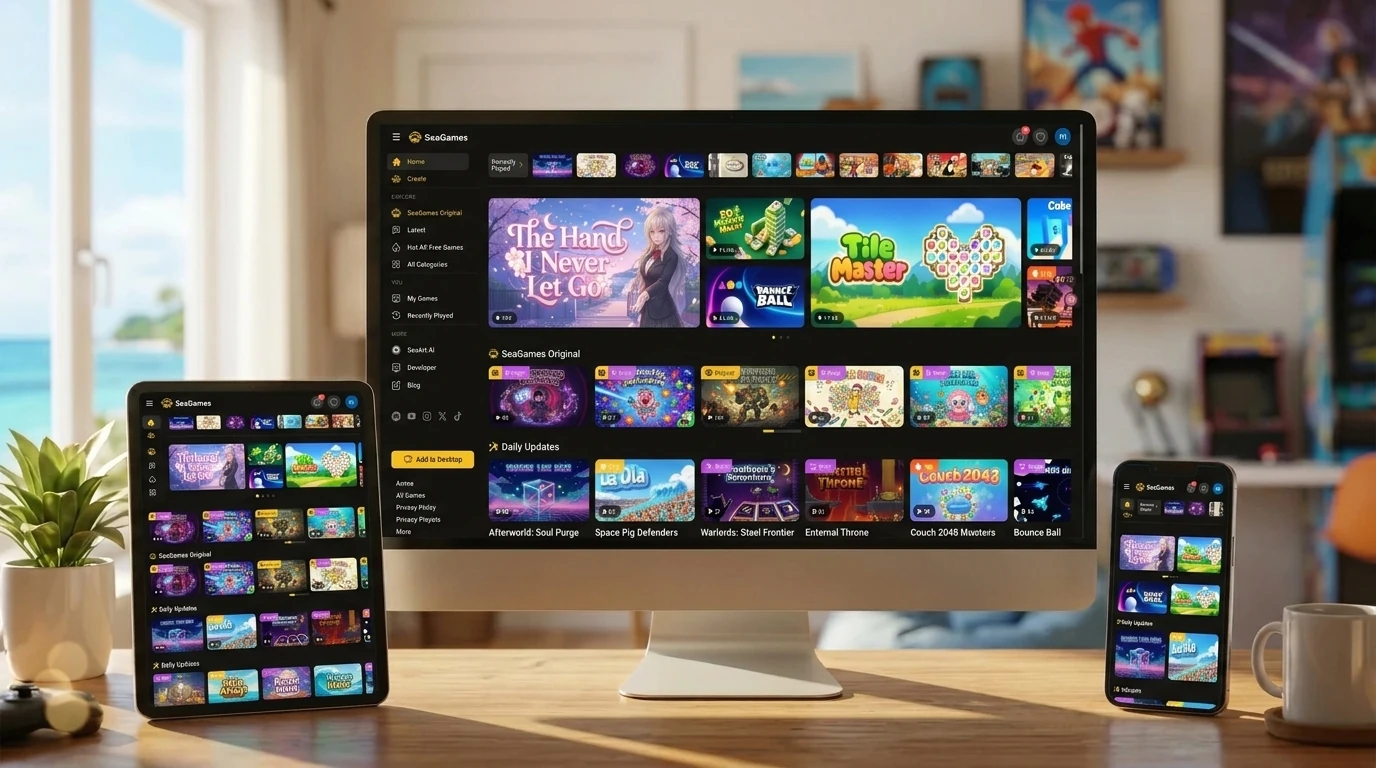
🧩 Why Indie Developers Pick SeaGames as Their First Stop
Your notes app may still hold a few lines you never deleted: how a mechanic should resolve, what drives a character, whether a level curve should spike or ease in. They are not a project, yet they keep pulling your attention. What actually stalls you is rarely a lack of ideas—it is the cost of getting started.
Will the stack feel too heavy, will the budget burn out first, and after you ship, will anyone actually play—when these three knot together, “I will start next week” drifts into “maybe later.”
If kickoff can be broken into smaller moves, if the first validation does not have to begin with full engineering, if playtesting does not require installs and sign-ups first, many ideas suddenly stay alive.
SeaGames offers a different order: state the rules clearly first, refine feel through back-and-forth chat, then drop a playable build on the web so people can open a match on impulse. When the path shortens, you hear your ideas land more often—and spend less time forever “getting ready.”
🖱️ Shipping a build is only halfway—what matters is who taps Play
🔹 SeaGames folds “being played” into everyday browsing instead of forcing a separate acquisition war
One quiet truth in the field: an executable design doc is not the same as a shareable experience. You can lock the numbers, wire the repo, even cut a trailer—and still stall on “they said they would play, three days later nothing is installed.”
Web playtests win on low friction. Send a link; within seconds someone can tell you if they care to continue. SeaGames also surfaces heat and fresh drops as visible browse paths, so your slice is more likely to ride “tap because it is there” traffic instead of dying on a private URL.
Early on you need honest reactions more than a perfect growth curve. When the experience chain shortens, you learn faster whether the tutorial drags, whether minute one bores, whether fail feedback makes people rage-quit. Spend the time saved on fixes—not on explaining why they should install.
Nothing here promises view counts. What is certain: the lighter the try, the better your odds of reaching “someone has played it” before your momentum runs out.
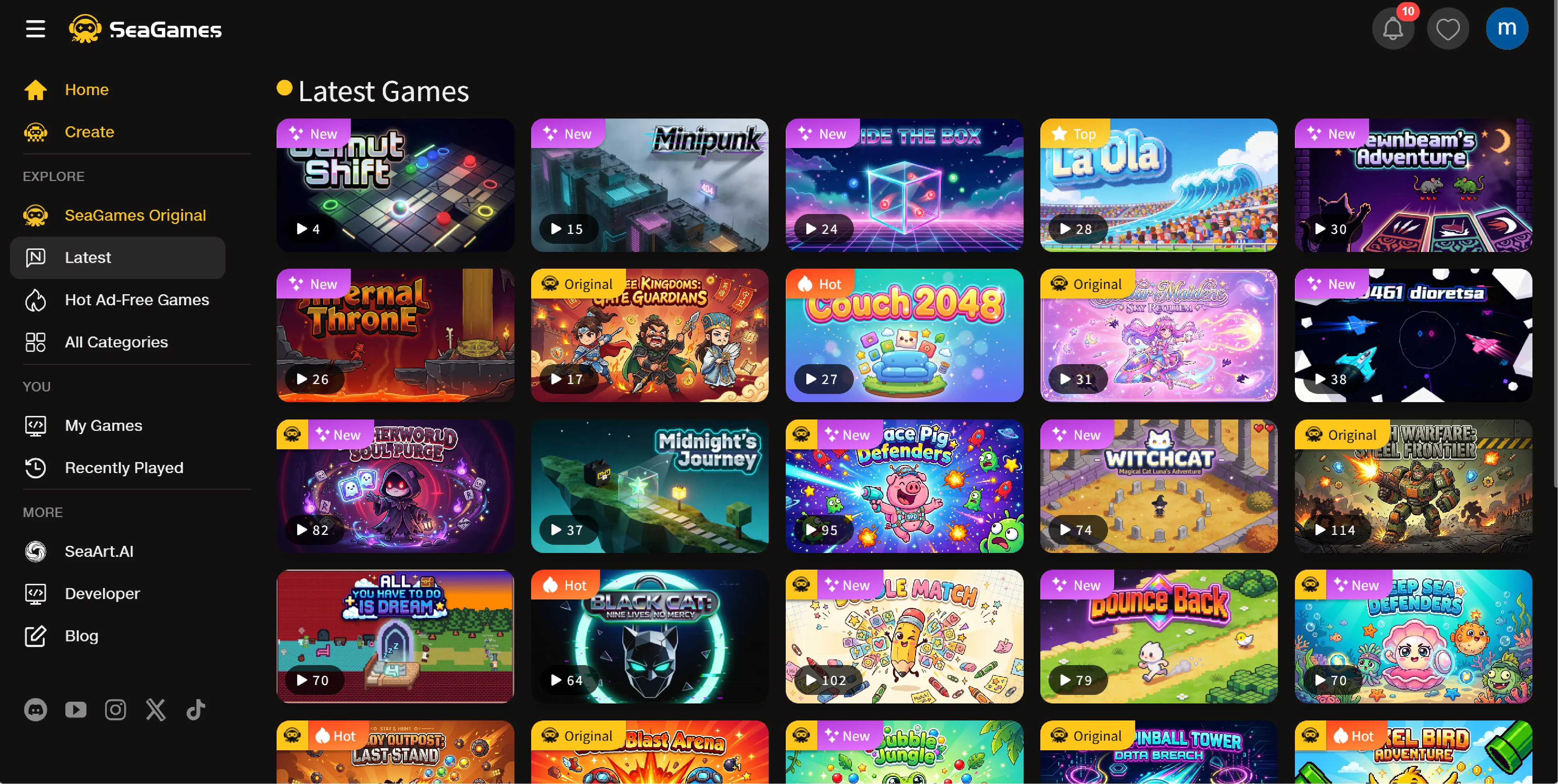
💬 Describe mechanics in language; advance the build in chat
🔹 Pack “write the spec” and “tune the feel” into the same thread
Traditional production often feels like juggling five vendors: one pipeline for art, another for SFX, another for motion—before the core loop even clicks, you are buried in procurement and format wrangling.
On the SeaGames line, the default move is verbal: what counts as a win, what punishes failure, whether the pace should snap or stick. Then iterate in conversation—spawn cadence, drop weights, tone of on-screen hints. Revise gameplay like a script, not relocate an entire project like a house move.
Taste still lives with you. The shift is less early grunt work “translating ideas into tickets,” more brain space for rhythm, tension, and learning curves. Fun remains your job—but repetitive labor can thin out.
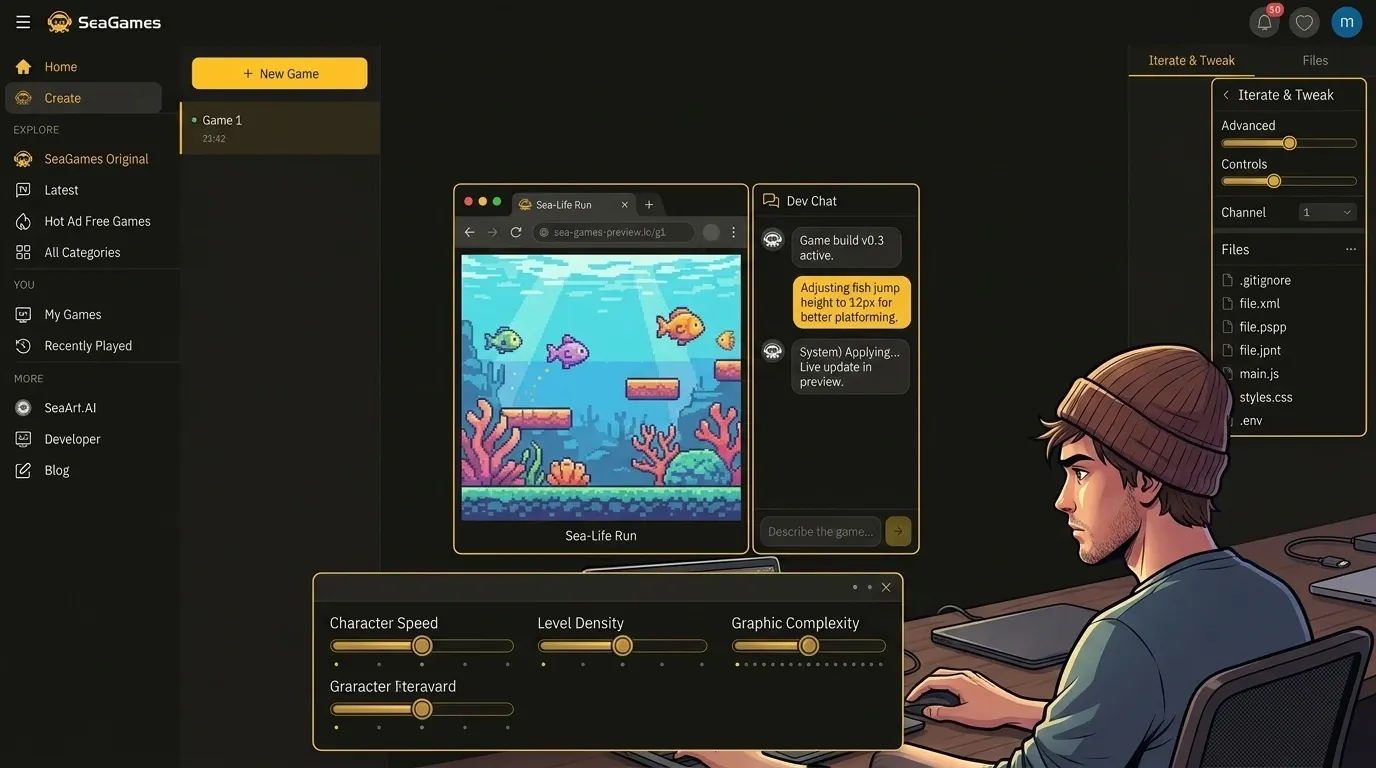
👥 Solo work drains stamina; outside signal recharges it
🔹 Discord and social hooks keep the process from sealing shut
Long-term solo hurts less from late nights than from having no reference group. Every doubt balloons into disaster; every small win feels like luck.
SeaGames still opens Discord, video, and social entry points. You can watch how others break down levels, handle harsh feedback, or name a demo. You will not always get an answer—but you know you are not the only one wrestling feel.
Treat those channels as radar too: which themes keep getting opened, which update rhythms pull people back. Indie decisions often miss exactly that sideways glance.
🎮 Let strangers play first; talk plans and upsells after
🔹 Player path stays light; creator entitlements follow the real checkout page and terms
A familiar letdown: the word “free” followed by hidden gates—trial ends, export locks, seat caps halved, the button you relied on suddenly gray.
On the player side SeaGames stresses online instant play, no install, and fewer ad interruptions—directly shaping whether a stranger will grant that first session. Creator-side ties into the SeaArt account stack; membership and billing details belong to the official pages. The pragmatic path: trade a minimal playable demo for signal before you scale spend.
Moving “can be played” earlier is not a license to ship sloppy. It protects your scarcest resources: time and patience. Many projects burn the latter before a real player ever shows up.
🧪 Revenue stories can wait—first earn proof someone finished a run
🔹 Validation loops beat fundraising narratives
The browser’s first stumble is often a gift: tutorials too long, prompts too shy, punishments too harsh—all show up fast in drop-off. See it sooner, fix sooner, rework less later.
This article does not import revenue tales from other platforms or invent a SeaGames payout formula. The safer route: use light distribution to capture “finished a loop” and “wants another” signals, then decide if art volume, level scope, or monetization deserve more fuel. Without first-hand play data, monetization talk is mostly self-soothing.
📈 Long haul is not one viral hit—it is matching the content pool’s pulse
🔹 Fresh cadence, original labels, and upload lanes decide whether the habit sticks
When you shift from a one-off drop to steady output, you start reading the platform’s breathing: which sections refresh, which tags hoard attention, which cadence forces your next changelog.
SeaGames keeps content moving, offers higher-recognition slots like SeaGames Original, and still leaves a developer upload door open. Strategically, instead of betting on a single miracle spike, mesh your ship rhythm, the platform’s rhythm, and player feedback rhythm.
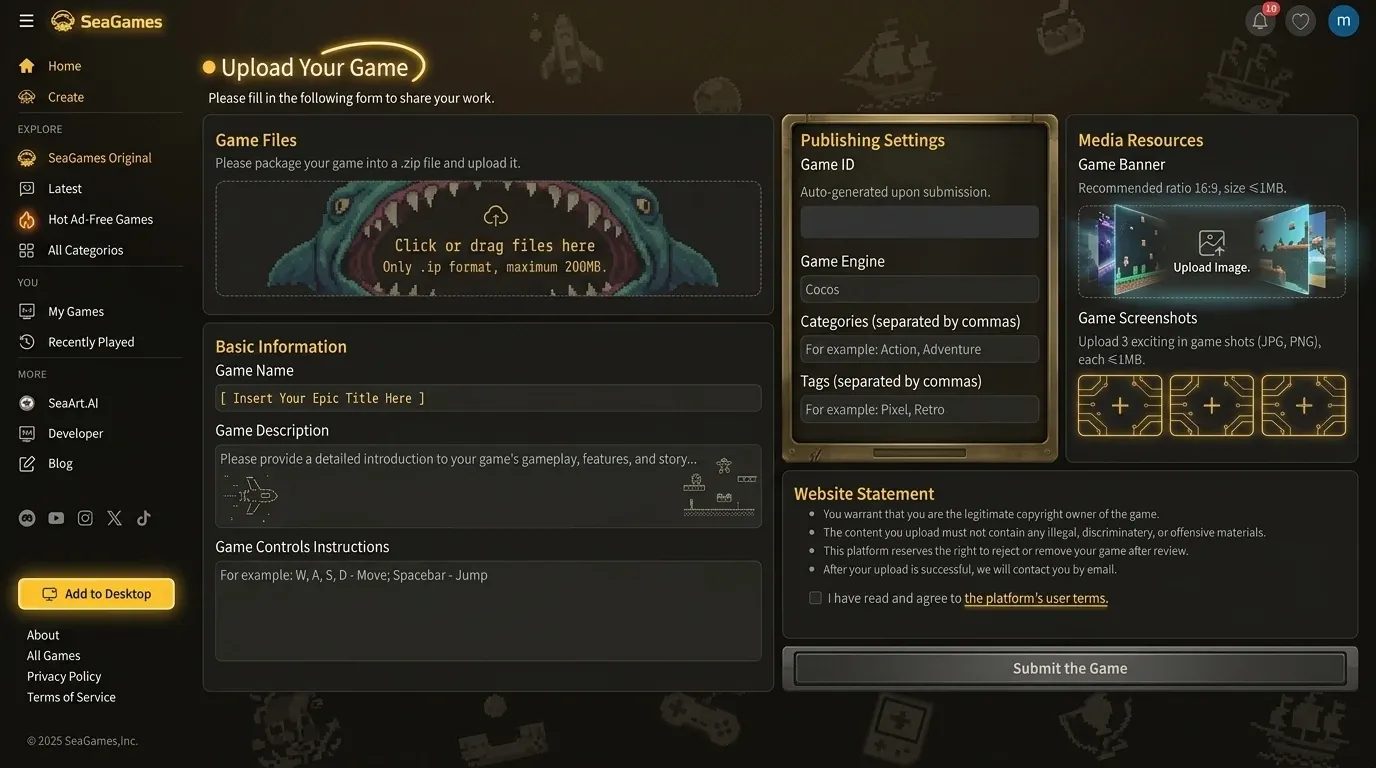
🔎 Skip the deck—trust the clicks you make yourself
🔹 Replace hype with a repeatable experience checklist
Marketing copy expires; the UI does not. Walk it yourself: does the list stay fresh, do games open without installs, are ads quiet enough, is upload obvious, does SeaArt sync trim duplicate work, does conversational creation actually shave the manual scaffolding time.
If those checks pass, the platform is real for you; if not, more adjectives will not help.
Break them apart: a pool that keeps refreshing, Hot and Latest entry points, a cleaner try environment, HTML5 in the browser, a developer upload chain, SeaArt-linked account power—each can be accepted on its own, no need to bundle into a black box.
⚡ SeaGames aims to shrink the gap from thought to “someone played it”
🔹 Product choices stacked together read as one route
When try is lighter, chat faster, upload clearer, discovery closer, you spin less on toolchain dread and distribution anxiety. It is still hard—but the hardest part returns to design: why players stay.
The barrier does not vanish by magic; entry changes shape: start from a rule you can say out loud, a loop that actually runs, a link someone is willing to open.
So however messy your draft, wild your lore, strange your mechanics—stop treating “once my toolchain is perfect” as the default gate. Hand the first session to real human fingers, then decide next week whether art or onboarding needs the love.
✍️ You can type the first rule into the chat box right now.