

Why are more and more developers choosing SeaGames
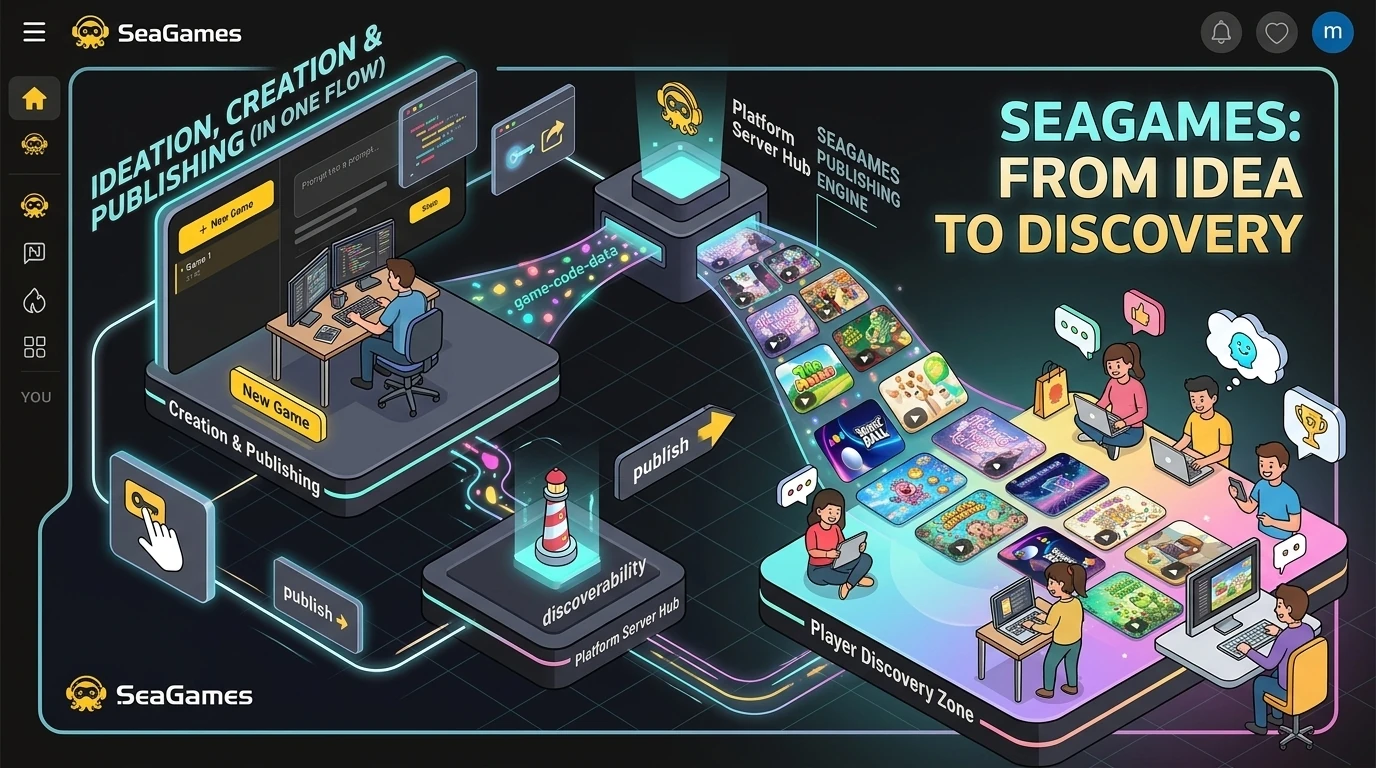
🛠️ Why More Developers Are Starting to Choose SeaGames
You have a game idea. Maybe a small mechanic spark, maybe something looping in your head for days. The block is rarely “no ideas”—it is shipping: tools, process, resources, and distribution keep getting in the way.
That is why more developers are looking at SeaGames. The pull is not only “play games, upload games, or reach players,” but that it makes “making games” lighter—especially when you can describe gameplay in natural language, iterate through dialogue, and advance a build almost like chat. That lowers the real barrier to creation.
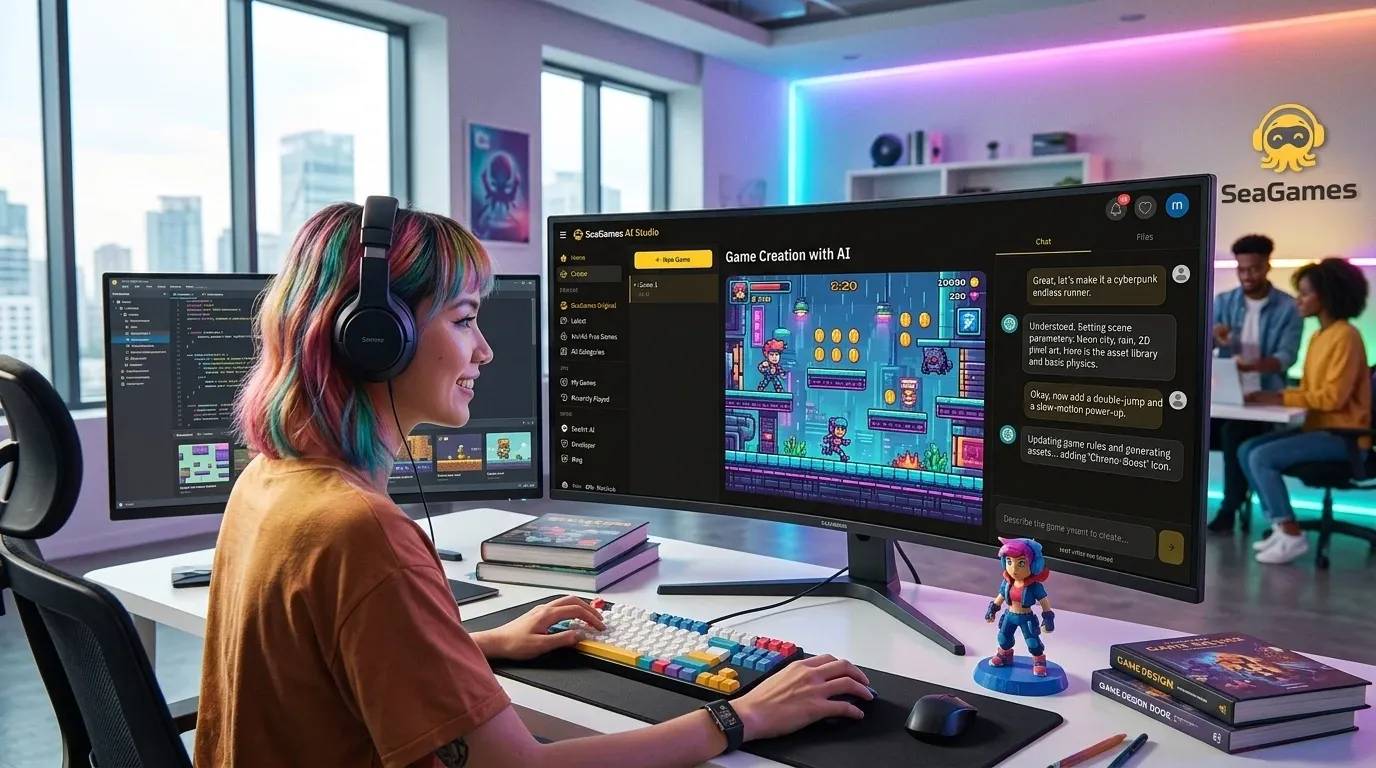
💬 Not every developer wants to start from a heavy toolchain
One of traditional gamedev’s pain points is not skill—it is start-up cost. Pick an engine, wire the environment, wrangle assets, shape logic, then translate a fuzzy idea into executable steps. Plenty of concepts die before the first implementation pass, not in the idea phase.
SeaGames is compelling because it skews toward a lighter, idea-first path. For many devs the win is not another dense panel—it is saying the idea out loud and having the system help push it forward. That entry fits rapid trial, fast shaping, and indie or small-team tempo.
🧠 Natural language development is changing where creation begins
A major draw for developers: you do not have to open with code—you can open with language. Describe a mechanic, state a goal, add rules, or spell out the feel you want. The order shift looks small; in practice it is huge.
The hardest part of much dev work was never typing syntax—it was making a vague thought precise. Natural language dev folds “expression” into the build. You spend less energy translating everything into technical moves before you can start; clarify the creative intent first, and implementation plus iteration run faster after.
🤖 Building through dialogue is closer to a real workflow than one-shot generation
The value is not typing one line and getting a perfect final build—it is back-and-forth: refine, narrow, deepen. Sketch a core loop, then add progression; tune difficulty after the loop runs; adjust pacing, feedback, and tone once something is playable.
Chat-driven development mirrors how games are actually made: rarely finished in a single pass, usually sanded round by round. For developers, the upside is cheaper, more natural “change” and lower-friction iteration.
You are not wrestling a cold tool—you are steering with something closer to how you think. Add what occurs to you; fix what feels off immediately. For indies, that continuous feedback loop matters.
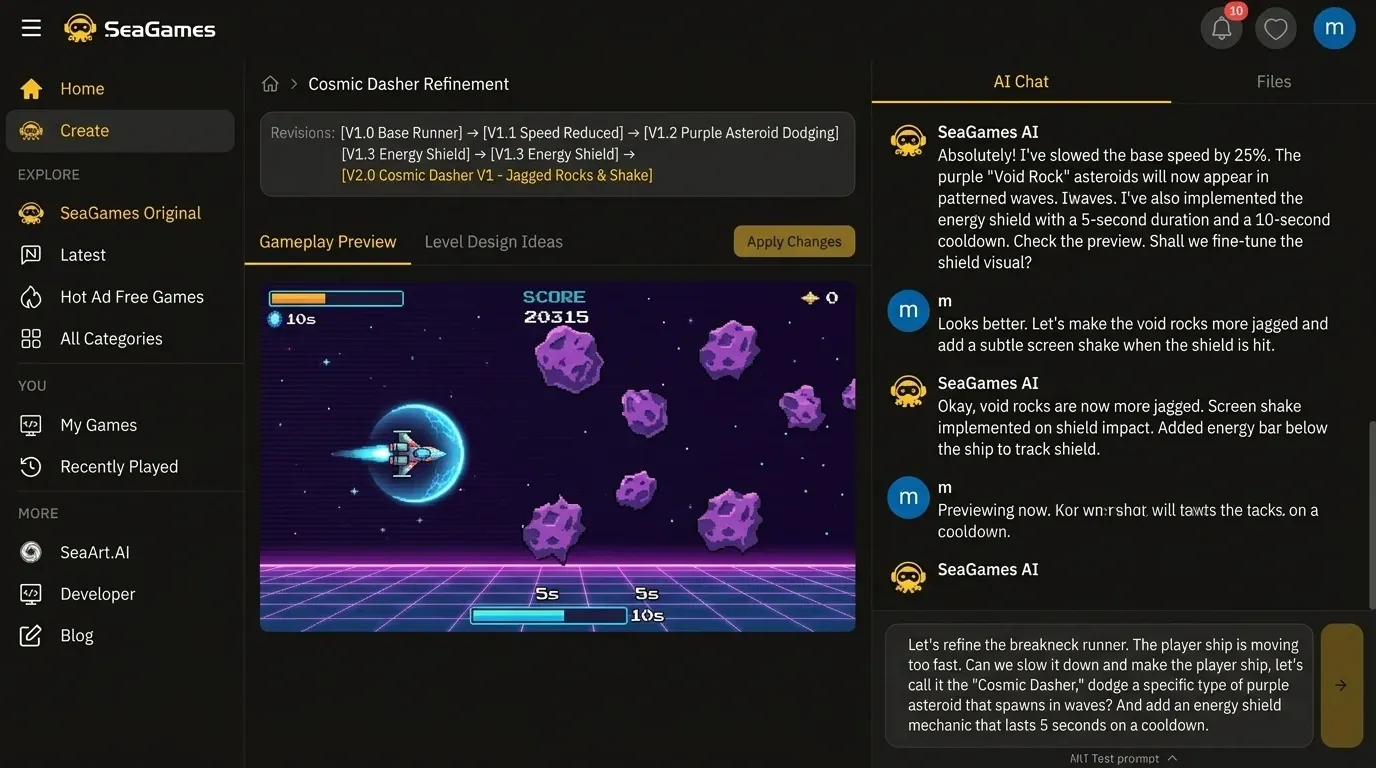
⚡ A lower start floor means more ideas actually ship
Many developers are capable but starved for time to validate each spark. A platform that turns ideas into prototypes faster is not only “more efficient”—it raises the odds those ideas become real.
SeaGames fits the jump from “I have an idea” to “I have a playable slice.” If you are still searching for direction, that speed lets you test several threads. If you are experienced, you can pour hours into feel, retention, and polish instead of repetitive upfront plumbing.
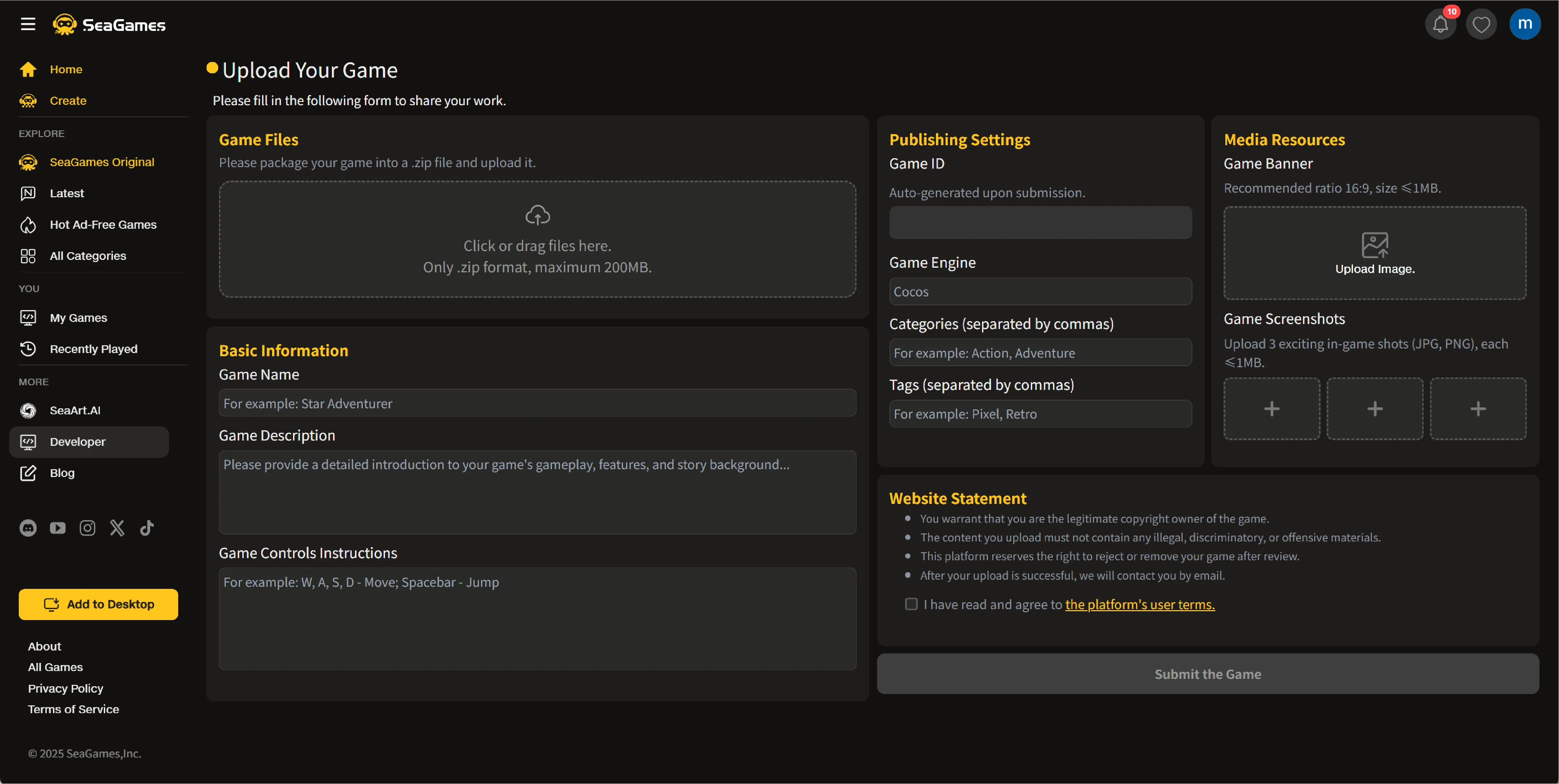
🌍 Shipping is step one—being seen is what keeps you going
Creator platforms love to obsess over “how to build.” What actually retains developers is “what happens after.” If a place both lowers the start cost and helps work surface to players, the pull changes completely.
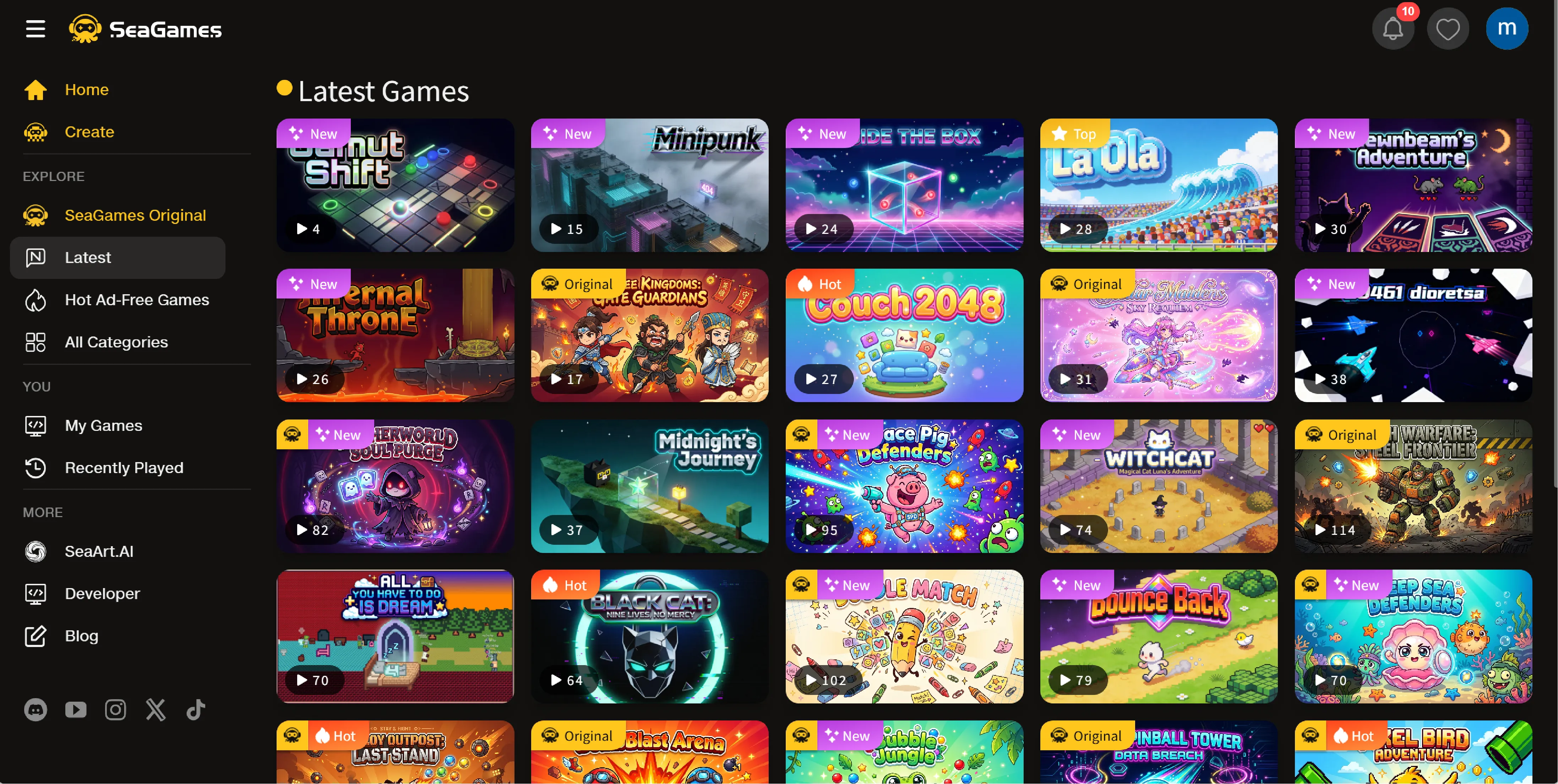
As a browser-first player hub, SeaGames has a natural edge: people already come here to find, open, and try games. You are not siloed in a pure tool—you are creating where discovery already lives. That shortens the gap between “dev” and “found.”
For many indies that distance matters: the fear is not failing to build—it is building into a void. A platform with built-in browse context beats a maker space with no audience scene.
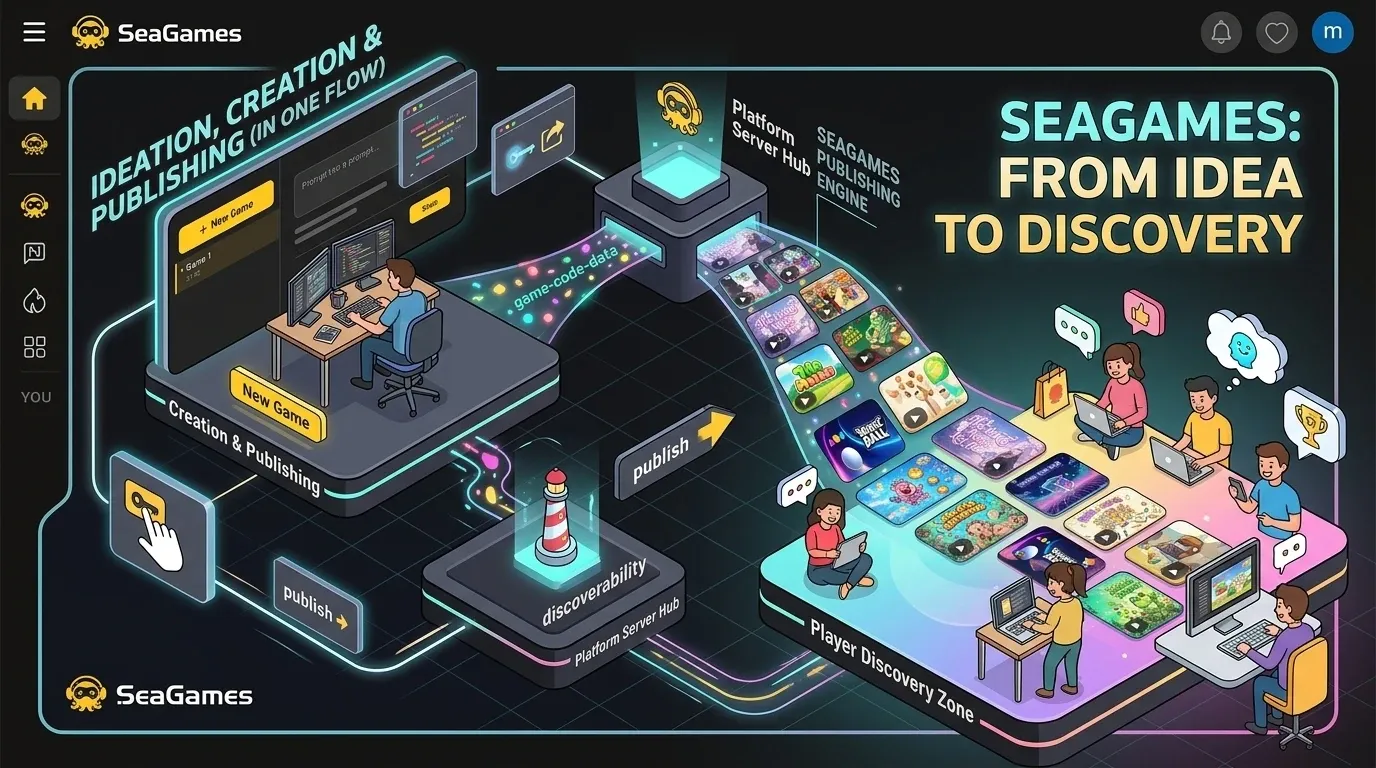
🎮 Browser games keep testing and sharing light
The web’s practical edge is weight: no download, lower try friction, simpler sharing. For developers that is not only smoother UX—it is faster feedback and an easier path for word-of-mouth.
When a build opens quickly, forwards easily, and runs across devices, real reactions surface sooner. Often what pushes the next polish pass is not dashboard charts alone—it is whether players start, stay, and return.
🔄 For indies, the best tool is not more complex—it is more continuous
More developers picking SeaGames is not because skill vanished—it is because they want skill spent where it counts. You still judge mechanics, tune rhythm, and read players; you just do not have to start every idea from the heaviest possible ramp.
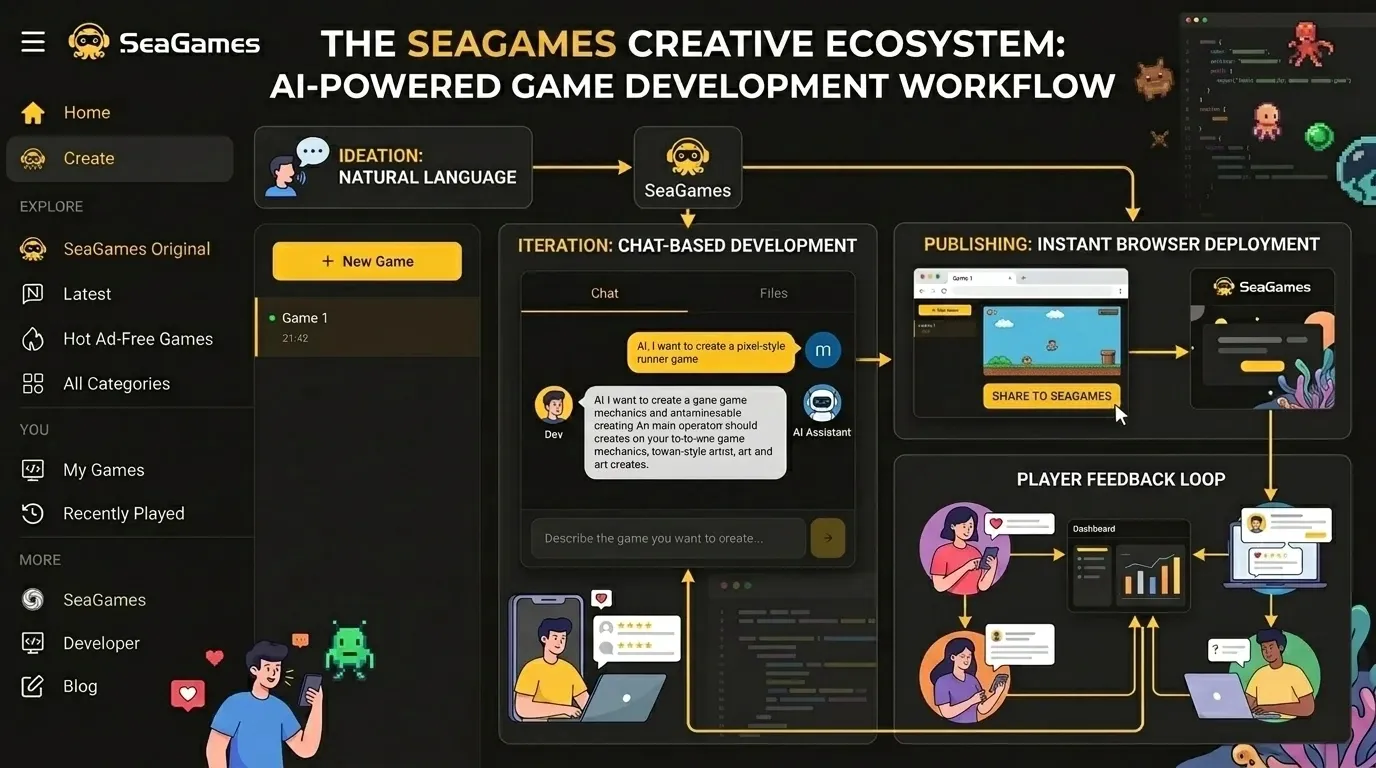
Natural language lowers the ramp in, chat smooths iteration, the browser stack nears players—together the chain feels connected. Continuity beats a single flashy feature, because real projects advance through small repeated pushes, not one miracle moment.
📈 Why this style of development keeps gaining pull
It matches how people actually create: answers often emerge while doing, not before. A stack that lets you speak, try, tweak, and publish in one breath beats a gate that demands a heavy process up front.
SeaGames draws attention not merely because it sits near AI, games, and browsers—it threads them into a smoother path. Start from an idea, shape it in natural language, refine in dialogue, then land it where players already are. That is the loop developers are more willing to reuse.
✅ Closing
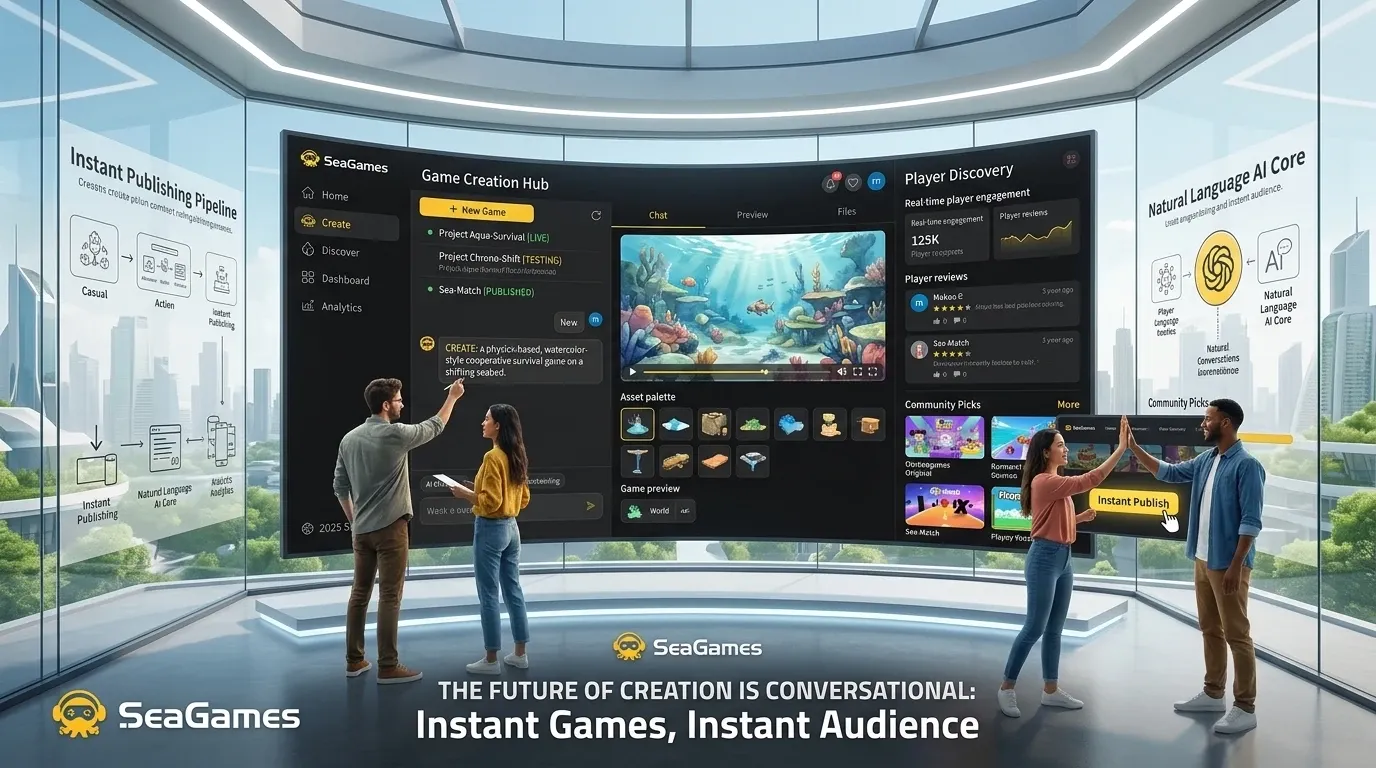
If you are a developer, the hook is rarely “AI is powerful” in the abstract—it is whether it gets you creating faster, iterating more naturally, and sitting closer to players. SeaGames matters because it starts packing those into one experience.
More developers choosing SeaGames may not mean quitting craft—it means finally using a workflow that feels closer to how they think.