

The Fun Way to Learn Game Design on SeaGames
🎨 The Fun Way to Learn Game Design on SeaGames
Game design is the craft of turning intentions into something playable: constraints, choices, characters, pacing, and the story the player feels in their hands. In plain terms, it is how scattered thoughts become rules someone can follow—and still want one more round.
The enjoyable path into design rarely starts with memorizing every system at once. It starts with curiosity, small bets, and quick loops: try an idea, watch what happens, adjust, repeat. A browser-first playground like SeaGames fits that rhythm—loads of titles to study, low friction to open a build, and a natural place to share something small when you are ready.
✨ What “fun” actually means for a designer
Players stick around when a game delivers a payoff: mastery, discovery, relief after tension, or a clever twist they did not see coming. Fun is not one ingredient—it is the blend of feedback, risk, and reward that makes someone smile and reach for another try.
Fun is not the same as “effortless.” Some of the best moments sit right after failure: a tough jump, a tight timer, a rule you misread once and now respect. Strong design offers both delight and resistance—enough challenge to feel earned, not so much that quitting feels smarter than retrying.
🌱 Grow ideas from small, honest sparks
Every project begins as a hunch: a scene from a film, a joke with friends, a dream image, or a real-life motion—run, stack, sort, dodge—that could become a verb in a game. Look around; the mundane is often a better seed than a forced “epic” pitch.
Your first concept does not need to be brilliant. Capture fragments—verbs, moods, one-line rules—and let them collide in a list. Curiosity beats self-judgment: the more seeds you collect, the more likely one combination will feel alive when you prototype it.
📐 Rules are where imagination becomes fair play
Rules tell players what the world allows and what it denies. They shape tempo and strategy: if you can only air-dash twice before touching ground, every jump becomes a tiny plan. Without clear limits, “anything goes” stops being a game and turns into noise.
When you author rules, aim for common sense at human scale—tight enough to create tension, generous enough that people still see a path forward. Each tweak is a hypothesis: does this version feel readable, tense, and fair? When challenge and clarity line up, you are touching what designers often call balance—and players feel it as “this is hard, but I get why I failed.”
🔊 Sound and music belong in the loop—not at the end of a checklist
A jump reads heavier with a crisp landing thud; a win streak feels taller with the right sting of melody. Audio is not wallpaper—it cues danger, relief, and identity. Even placeholder SFX during a rough build help you sense whether timing and feedback belong together.
You do not need a final soundtrack on day one, but do try your build with the sound stripped away. Browser games often fight for attention in noisy rooms and small speakers; a clear sonic read can rescue readability when the art is still rough.
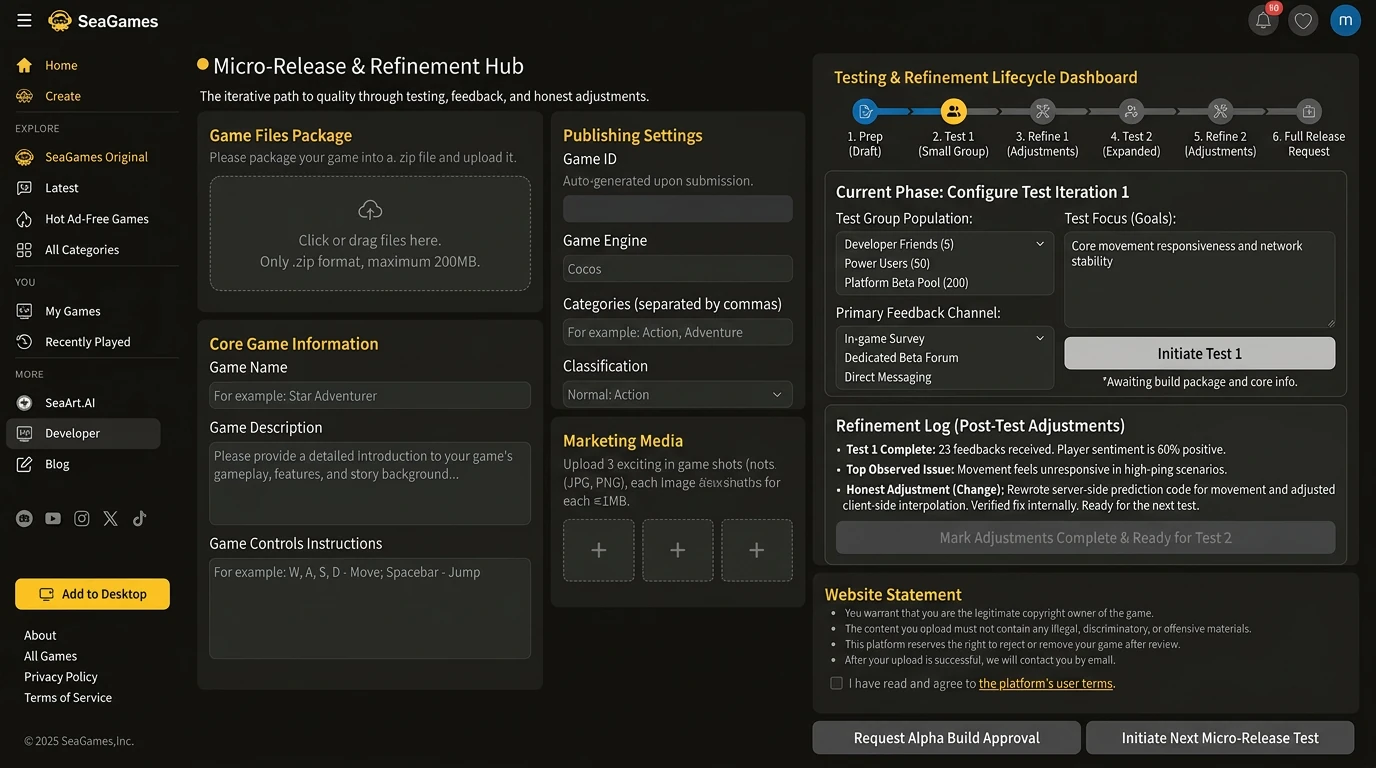
🧪 Playtesting is the honest mirror
Nothing replaces watching someone else play. You learn where they laugh, hesitate, misread a prompt, or quit without telling you. Those reactions are data—sometimes kinder than any spreadsheet.
Ship small, invite feedback, change without shame. Big releases still run many test passes; your micro-build deserves the same habit. Test again, read the room, tighten the awkward corners—and the same loop gets easier every time you repeat it.
🔁 Think small first: one room, one verb, one loop
Scope is the silent killer of learning. A single level, one character verb, or one scoring twist can teach you more than a ten-system design doc that never ships. Finish tiny loops; then stack features, obstacles, and story beats once the spine feels good.
Browser games reward that discipline: sessions are short, comparisons are easy, and you can study how other creators pace tutorials and failure. Treat the catalog as a free lecture hall—then give back a small experiment when you are ready.
🚀 Keep building; labels catch up later
People often imagine “game designer” as a job title earned upfront. In practice, it is a habit: you propose a rule, test it, listen, adjust. Tinker with a mechanic the way you would tune a bike—small turns, immediate rides. Simple interactions, pushed patiently, sometimes explode into memorable play.
You do not need the perfect plan or the heaviest toolchain to begin. Start where you are, borrow courage from quick play sessions, and let curiosity pull you forward. The journey of learning design can be as lively as the games you will eventually ship—especially when the path stays playable.
❓ FAQs
What is game design?
It is shaping the rules, content, and feedback of a playable system—where creativity meets logic so that an experience reads clearly and feels intentional.
Do I need coding to start?
Not on day one. You can begin with paper prototypes, simple engines, or lightweight browser workflows. The early goal is to notice what makes play stick—not to win a syntax contest.
How do I find better ideas?
Write what you already love—films, sports, chores, inside jokes—and ask “what if” until verbs appear. Great hooks often start tiny.
How do I know if my game is fun?
Watch real players. Listen for delight, confusion, and silence. Fun shows up in retries, grins, and the questions they ask after the round.
What is the easiest way to learn?
Ship micro-builds, play widely, steal time for reflection after each session. Each small loop teaches more than a long wait for the “right” moment to begin.
✅ Closing
Learning game design the fun way is not about shortcuts—it is about keeping the work playable, social, and honest. SeaGames can sit in that story as a place to sample mechanics, ship small browser experiments, and invite the world to react.
Pick one verb, one rule change, or one sound swap today. The next lesson is already hiding inside that tiny build.