

تصميم ألعاب الفيديو للمبتدئين: اختيار النوع الأول لك في SeaGames
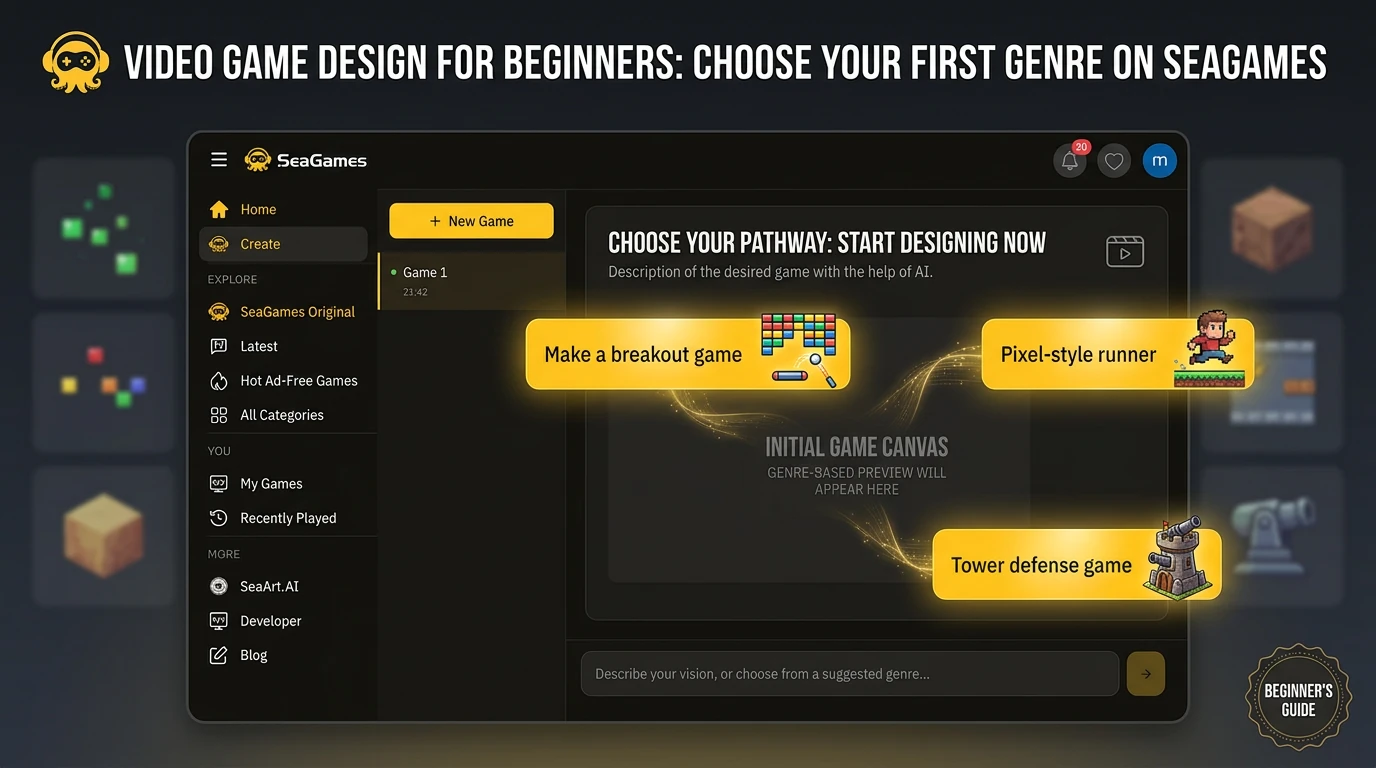
🎮 Video Game Design for Beginners: Picking Your First Genre on SeaGames
“Genre” is a shorthand the industry cannot quit: storefront tags, jam themes, water-cooler comparisons. Great releases constantly borrow across lines—a hop-and-bop level gains a puzzle layer; a card battler borrows run-based tension; a role-playing frame picks up life-sim beats.
So why bother naming a genre at all when fusion is normal? For newcomers, a label is less a cage than a compass: it suggests where to begin, what skills you will rehearse first, and how big “version one” should be—especially when assistants and conversational tools can spin up art, copy, and logic faster than ever. The trick is to treat the tag as scaffolding, then bend it once a core loop feels alive.
🧭 What a genre actually buys you in the messy middle
Creative work starts noisy. A genre gives you a temporary filing system: a default camera distance, a likely control scheme, a rough sense of how long a “vertical slice” should be, and language other people (including collaborators and assistants) can parse quickly.
Used well, it helps you pick a first milestone that is not the entire dream game, sketch what “playable rough” means before polish, and explain intent without a forty-page bible. Used poorly—treated like law—it blocks hybrid ideas that were always going to be the point. Start inside a fence you can see over; hop it later on purpose, not by accident.
✍️ The beginner superpower: turning fog into explicit asks
Modern workflows reward crisp inputs. Whether you are prompting a helper, writing a ticket, or talking to a friend who codes, outcomes track how well you separate moving parts: verbs on the character, how the camera behaves, emotional tone, how difficulty ramps, and what counts as victory or failure.
Genre vocabulary accelerates that translation. Saying “exploration-heavy sidescroller with gated abilities” bundles expectations about map flow and upgrades. Saying “branching dialogue experience” signals scene structure, choice UI, and pacing. You still design—but you spend less time re-explaining the universe from zero every time you iterate.
🌟 Friendly first genres (and what each trains)
Run-and-jump sidescrollers.
They foreground movement literacy: gravity reads, collision forgiveness, jump arcs, and readable hazards. Level shape becomes your difficulty dial. Once a single stage feels fair, you can graft a twist—dash chains, time windows, reversible gravity—without rebuilding from scratch.
Grid or logic puzzles.
Technically they can stay small while teaching ruthless clarity: onboarding, feedback when a rule is broken, and the cadence of “aha” beats. The hard part is design judgment, not poly counts—ideal when you want a tight, finishable web build.
Incremental “one-more-tap” loops.
A minimal core—act, reward, spend, escalate—forces you to think in economies and curves. You can ship something playable in a weekend-shaped block, then hang cosmetics, milestones, or light narrative on the spine once the numbers feel honest.
Choice-forward, scene-driven experiences.
When mechanics stay light, you practice structure: branching beats, emotional timing, interface for decisions, and rewrites. Assistants can speed drafting and iteration, but pacing and consequence still belong to you.
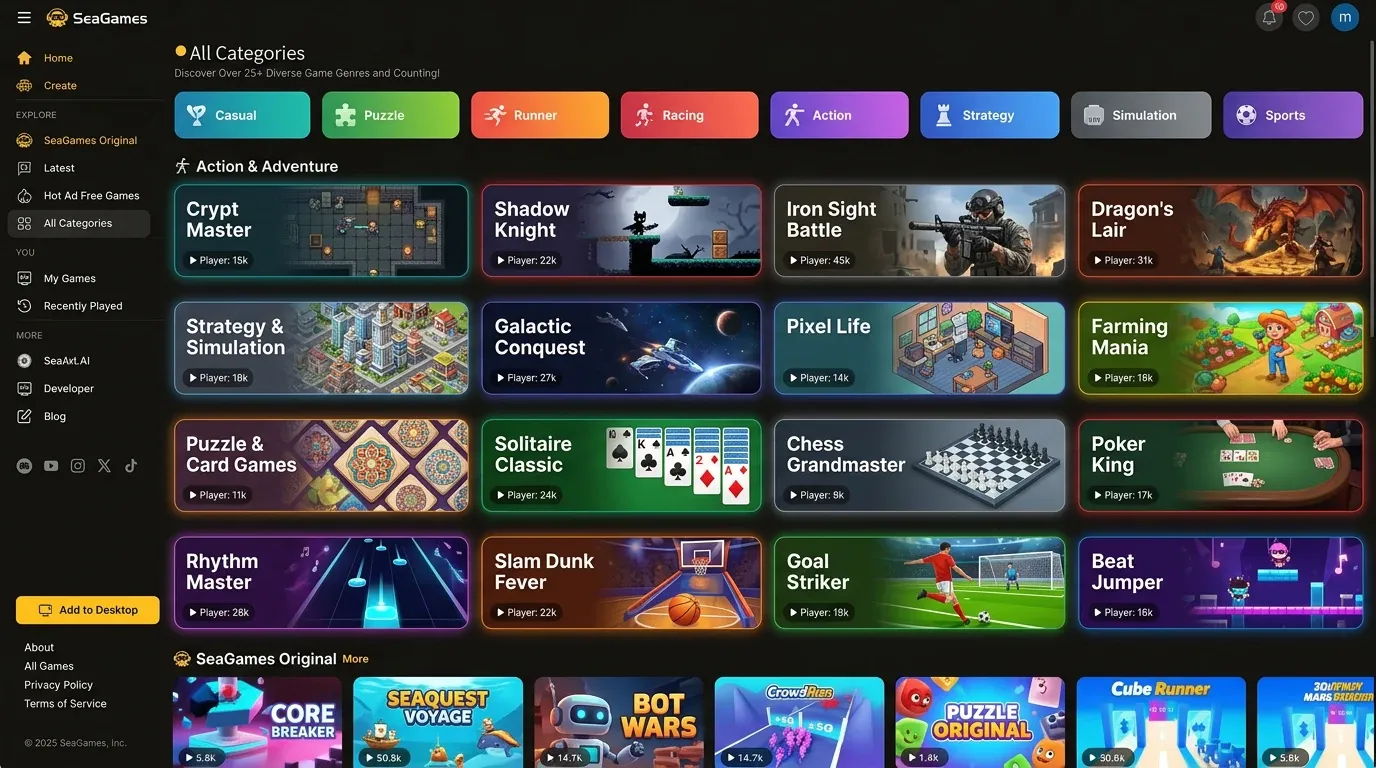
⚠️ Exciting genres that punish unfocused first swings
Exploration-heavy maps with ability locks.
Interconnected space, gating, and revisit tension are satisfying—and planning-heavy. If you crave it early, prototype a postage stamp: one biome slice, two tools that open new corners, a single boss-shaped skill check. Prove the lock-and-key rhythm before you draft the whole atlas.
Role-playing stacks.
Dialogue volume, progression tables, inventory UX, and quest states multiply fast. Helpers can draft text or tables, yet coherence remains human work. Try a micro-RPG: one hub, a handful of NPCs, one quest chain, one payoff item—enough to learn pipeline pain without financing an opus.
Simulation sandboxes.
They range from toy to spreadsheet. The failure mode is parallel systems all half-built. Anchor on one loop—tend a single resource, care for one companion, run one shop day—until it breathes before you bolt on economies, schedules, or AI crowds.
🎯 If you are stuck, choose by skill—not by hype
Chasing the trendiest tag rarely fixes “I do not know where to cut.” Instead, ask what you want to rehearse this month. If it is motion and feel, lean into a small sidescroller. If it is clarity and teaching, pick a puzzle frame. If it is pacing numbers and upgrades, try an incremental skeleton. If it is narrative architecture, favor a scene-driven format—then keep systems humble.
Let assistants compress grunt work, not define your scope. Speed without a boundary still ships half-games; speed with a genre-shaped fence often ships learning.
🤖 Where AI and chat-style workflows actually help beginners
Assisted tools do not swap out taste—they shave repetitive distance: faster placeholder art, alternate dialogue passes, more mechanic variants to compare, less fear of throwing a draft away. Natural-language iteration pairs well with browser delivery: describe a change, rebuild a slice, send a link, watch a friend fail in real time.
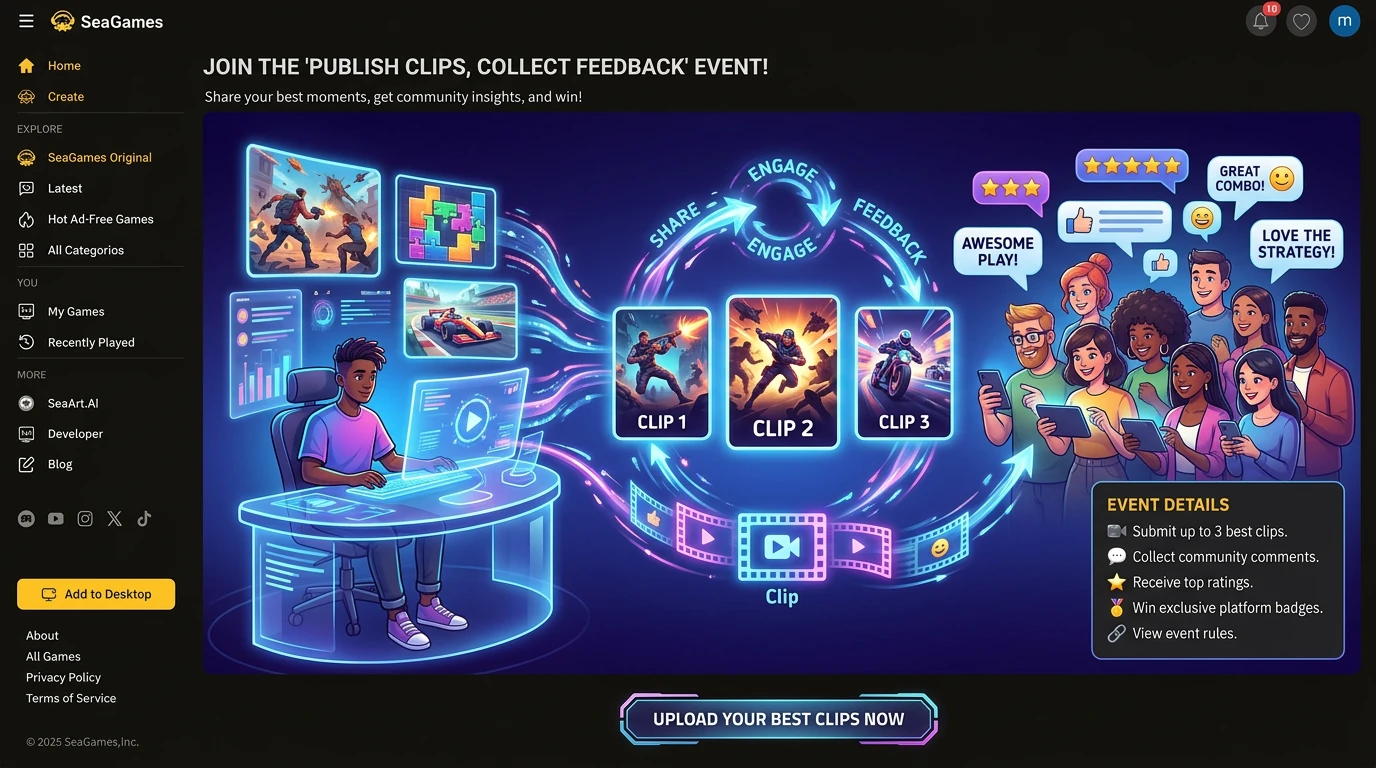
Platforms such as SeaGames sit in that loop as a place to browse how others solved similar genre problems in short sessions, then publish a tight HTML5 experiment so feedback arrives while memory of the build is still fresh.
✅ Closing
Genres are training wheels, not destiny. Pick one to shrink today’s decisions, build a deliberately small vertical slice, steal lessons from instant browser games you admire, remix once the spine holds weight. The fastest way to learn video game design is still the boring truth: finish tiny things, watch real people play, repeat.
Name your first genre, cut the scope in half once more, and put a link in someone’s hands this week—on SeaGames or anywhere honest feedback shows up. The label can change; the habit of shipping cannot.